How to Calculate Your Actual Profit Selling Pokémon Cards on eBay
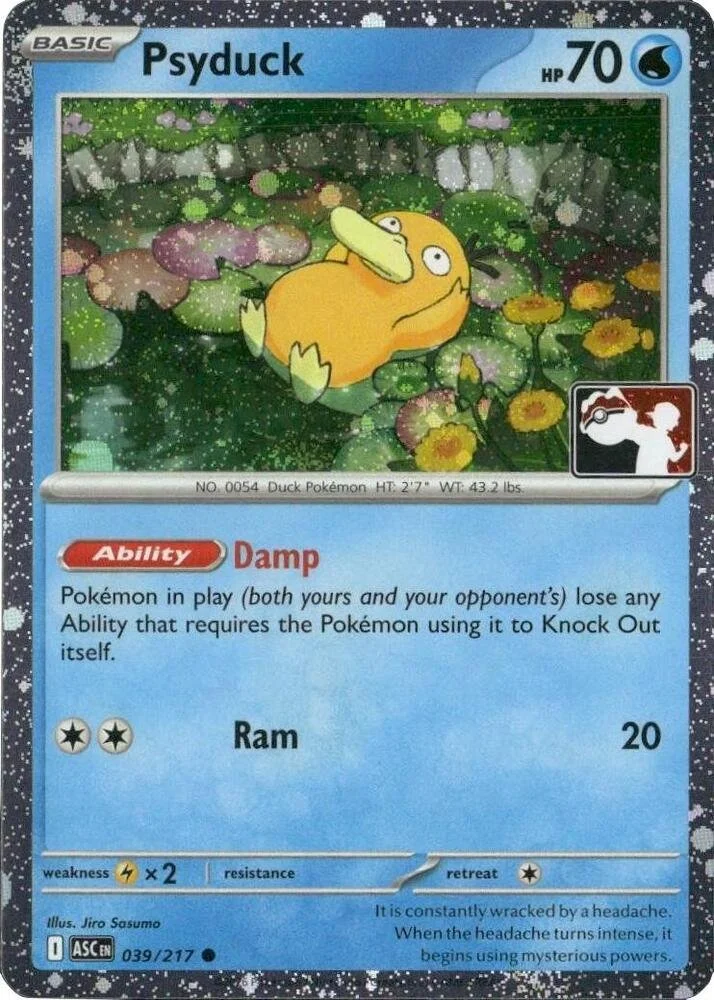
The real numbers behind a $17.99 Psyduck card I pulled from a tournament participation pack.
I'm building a small card-reselling business around something I already enjoy: Pokémon and sports cards. Part of my plan is to sell cards I receive through Pokémon TCG tournaments and reinvest the proceeds in inventory. Over time, I hope this business can support bigger financial goals: paying off debt, building savings, and eventually investing for the future.
But before I can build a business, I need to answer a much smaller question: When I sell a card on eBay, how much money do I actually make?
Rather than using imaginary numbers, let's look at a real transaction from my own account: a Psyduck Cosmos Holo from a Prize Pack Series 9 pack that I sold on eBay for $17.99. I received the pack for entering a Pokémon tournament; I didn't buy the Psyduck as an individual card.
The actual numbers from my Psyduck sale
Here's what eBay showed for this order:
Card subtotal: $17.99
Shipping charged to the buyer: $1.09
Sales tax collected by eBay: $1.14
Total paid by the buyer: $20.22
And here is how eBay calculated my order earnings:
Buyer order total: $20.22
Sales tax eBay collected: −$1.14
Transaction fees: −$4.29
Order earnings: $14.79
My card sold for $17.99, and eBay reported $14.79 in order earnings. After subtracting the $0.78 I paid for postage and the $0.28 I spent on shipping supplies, I had $13.73 in net sale proceeds before considering any tournament-related costs.
That difference is important: the amount eBay says I earned isn't automatically the profit I made.
Why the $20.22 order total isn't my revenue
The buyer paid $20.22 in total, but that included $1.14 in sales tax collected by eBay. That tax was part of the buyer's checkout total, not money I could keep.
The amount I collected for the card and shipping was:
$17.99 + $1.09 = $19.08 in seller revenue before fees.
Next, eBay deducted $4.29 in transaction fees:
$19.08 − $4.29 = $14.79 in reported order earnings.
One subtle detail matters here: eBay generally calculates its percentage-based final value fee using an amount that includes the item price, buyer-paid shipping, and applicable sales tax. So sales tax isn't my revenue, but it can still affect the fee calculation. You can read more in eBay's official selling-fee explanation.
Why did eBay charge $4.29 in fees?
That was the actual transaction-fee amount shown on my order. It represents roughly 21.2% of the buyer's $20.22 checkout total, but that does not mean eBay has a universal 21.2% fee rate for trading cards.
A seller's fees can depend on the category, seller account and Store plan, optional advertising, and other circumstances. The order summary I have doesn't identify every component of the $4.29, so I'm not going to claim it was all one standard final value fee.
For any sale, I want to use the actual fees eBay recorded, not just a percentage I remember from a previous sale. If you're checking your own transaction, eBay explains how to open the detailed fee breakdown in Seller Hub or My eBay.
My actual shipping costs — and what I kept
Now I can go one step beyond the eBay order summary because I know exactly what I paid to ship the card:
Actual postage: $0.78
Shipping supplies: $0.28
Total fulfillment cost: $1.06
Here's the complete breakdown using the costs I have recorded:
Card selling price: $17.99
Shipping paid by buyer: +$1.09
Seller revenue before fees: $19.08
Actual eBay transaction fees: −$4.29
Actual postage: −$0.78
Shipping supplies: −$0.28
Net sale proceeds before tournament-related costs: $13.73
So the math is:
$14.79 order earnings − $0.78 postage − $0.28 supplies = $13.73.
The buyer paid $1.09 for shipping, while my actual postage cost $0.78. That helped offset fulfillment costs, though I still had to account for the $0.28 in supplies.
Where the Psyduck came from: a tournament participation pack
This particular card wasn't purchased as inventory. I pulled it from a Pokémon Prize Pack Series 9 pack that I received for entering a tournament. That means I had no separate purchase price for the Psyduck card itself.
But receiving a pack for participating isn't necessarily the same thing as getting it at no cost overall. There may have been a tournament entry fee or other event expenses. The order figures above don't tell me what those costs were or how I should allocate them across any prizes or cards I received.
For my own records, I want to log the tournament entry and other event costs separately, record that the Psyduck came from its Series 9 pack, and then track the $13.73 from this completed sale. That way, I don't count the same expense twice or describe money from the sale as pure profit when an event cost may still need to be considered.
So $13.73 is the amount remaining from the sale after eBay fees, postage, and supplies—not proof that the entire tournament was $13.73 profitable. Income taxes or other business expenses can also affect the final result.
Why this matters when you're building a small card business
When you're running a business with hundreds of cards, an overlooked expense can add up quickly. But I think the numbers matter even more when you're starting small.
I'm trying to develop a repeatable approach to card flipping, using tournament winnings where possible and making careful decisions about what to sell and what to reinvest. With limited working capital, understanding the real return on every sale matters.
At this stage, I'm interested in three questions beyond whether an individual card sells:
Did the transaction actually generate a profit? I want to account for fees and real costs, not just the sale price.
How quickly did the card sell? A card that sits for months ties up inventory value that might otherwise support a different flip.
How much cash do I have available for the next purchase? Available cash is different from profit, and inventory that's still unsold isn't money I can spend.
The goal isn't to make every transaction look impressive. It's to make better decisions over time.
The simplest way to track card-flipping profit
I would record at least the card's identity, acquisition cost and source, amount collected from the buyer excluding sales tax, actual eBay fees, postage and supplies, and final realized net profit. For a card pulled from a tournament participation pack, I'd link it to the event and track any entry fees and related event expenses separately. I'd only count cash from the prize card when it actually sells—not when I first estimate its value.
I also separate profit from cash flow. Buying another card takes cash out of the business now, even though I won't know the profit on that inventory until it eventually sells. Tracking both gives me a clearer picture of whether the business is truly growing.
Try my free Card Flip Profit Calculator
I created a free Card Flip Profit Calculator for exactly this reason. You can enter a potential card's purchase price, selling price, fees, shipping, and other expenses before deciding whether a flip makes sense.
Use the Free Card Flip Profit Calculator
For people tracking multiple purchases and sales, I also offer a Card Reseller Inventory & Profit Tracker spreadsheet on my website. It helps organize inventory, expenses, fees, and realized results in one place.
View the Card Reseller Profit Tracker
What this one Psyduck sale taught me
The headline number for my Psyduck was $17.99. The customer paid $20.22, including shipping and tax. eBay reported $14.79 in order earnings. After $0.78 in postage and $0.28 in supplies, I had $13.73 remaining from the sale. Because it came from a tournament participation pack rather than a separate card purchase, I also need to consider the event's costs before making a claim about overall profitability.
That's the number I want to pay attention to as I build the business—not simply the sale price. A few small fees and costs can change what a flip actually contributes.
Card flipping is something I enjoy because it combines my interest in Pokémon, trading card games, and sports with the challenge of learning to run a small business. My longer-term ambition is to use the income I build to improve my finances and, eventually, invest for the future.
I don't expect every card to be a home run. But I do want to know what each sale actually contributes.
Real cards. Real numbers. One step at a time.
Earn. Learn. Live.
— Brent England
Disclosure: This post describes my own eBay sale of a Psyduck obtained from a Prize Pack Series 9 pack received for entering a tournament. The $17.99 sale, $4.29 transaction fees and $14.79 order earnings come from the order summary; the $0.78 postage and $0.28 shipping supplies are my recorded costs. Net sale proceeds were $13.73 before any allocable tournament fees, other costs or taxes. eBay policies and fees may change.