How I'm Turning Pokémon Tournament Winnings Into an eBay Business
Using an activity I already love to learn how to build a small card-reselling business—and, eventually, a better financial future.
I've always enjoyed the competitive side of the Pokémon Trading Card Game. I like the strategy, the people I meet, and the challenge of improving as a player. But lately I've been looking at another part of tournaments: the prizes I bring home.
I'm building a small eBay business focused on Pokémon and sports cards, and one of my ideas is to put tournament prizes to work instead of letting every extra card sit in a box. It's a way to start with something I'm already involved in, learn the business side of a hobby I enjoy, and gradually build capital without making big speculative purchases.
This isn't a story about making a living from tournament winnings. It's an experiment in using the opportunities already in front of me—and tracking the numbers to see what actually works.
Where the inventory comes from
At the local Pokémon tournaments I attend, I typically receive one Prize Pack Series 9 pack for entering. Depending on how I place, I may earn additional packs or store credit. The exact awards vary by event and store.
Those rewards can take several different paths. Sometimes a card is useful for a deck. Sometimes it's a card I'd like to keep. And sometimes it's a card another collector or player may be interested in buying.
When I receive a pack, I don't assume everything inside is automatically valuable. I check the exact printing and condition, look at completed sales, and decide whether listing a card makes sense after fees, postage, and supplies.
Store credit is another possibility. Rather than treating it like cash profit, I can use it to buy cards or supplies through the store and record what I acquired. The value I get back depends on what I purchase and whether I can actually resell it.
A real example: the Psyduck I sold on eBay
One sale that illustrates the idea is my Psyduck Cosmos Holo. It came from a Prize Pack Series 9 pack I received for entering a Pokémon tournament. I didn't purchase the Psyduck as an individual card.
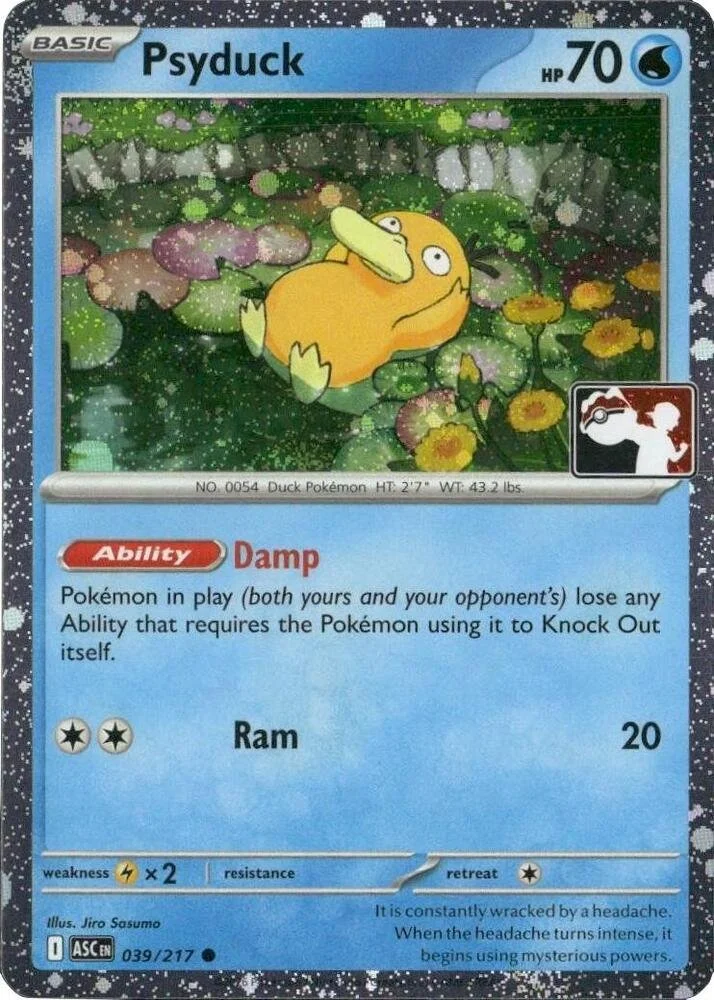
I listed it on eBay and sold it for $17.99. Here's the actual transaction, including the shipping costs I recorded:
| Item | Amount |
|---|---|
| Card sale price | $17.99 |
| Shipping charged to the buyer | +$1.09 |
| Revenue excluding buyer sales tax | $19.08 |
| eBay transaction fees | −$4.29 |
| Postage I paid | −$0.78 |
| Shipping supplies | −$0.28 |
| Net sale proceeds before tournament costs | $13.73 |
The buyer also paid $1.14 in sales tax, which eBay collected. That amount wasn't mine to keep, so I haven't included it as revenue.
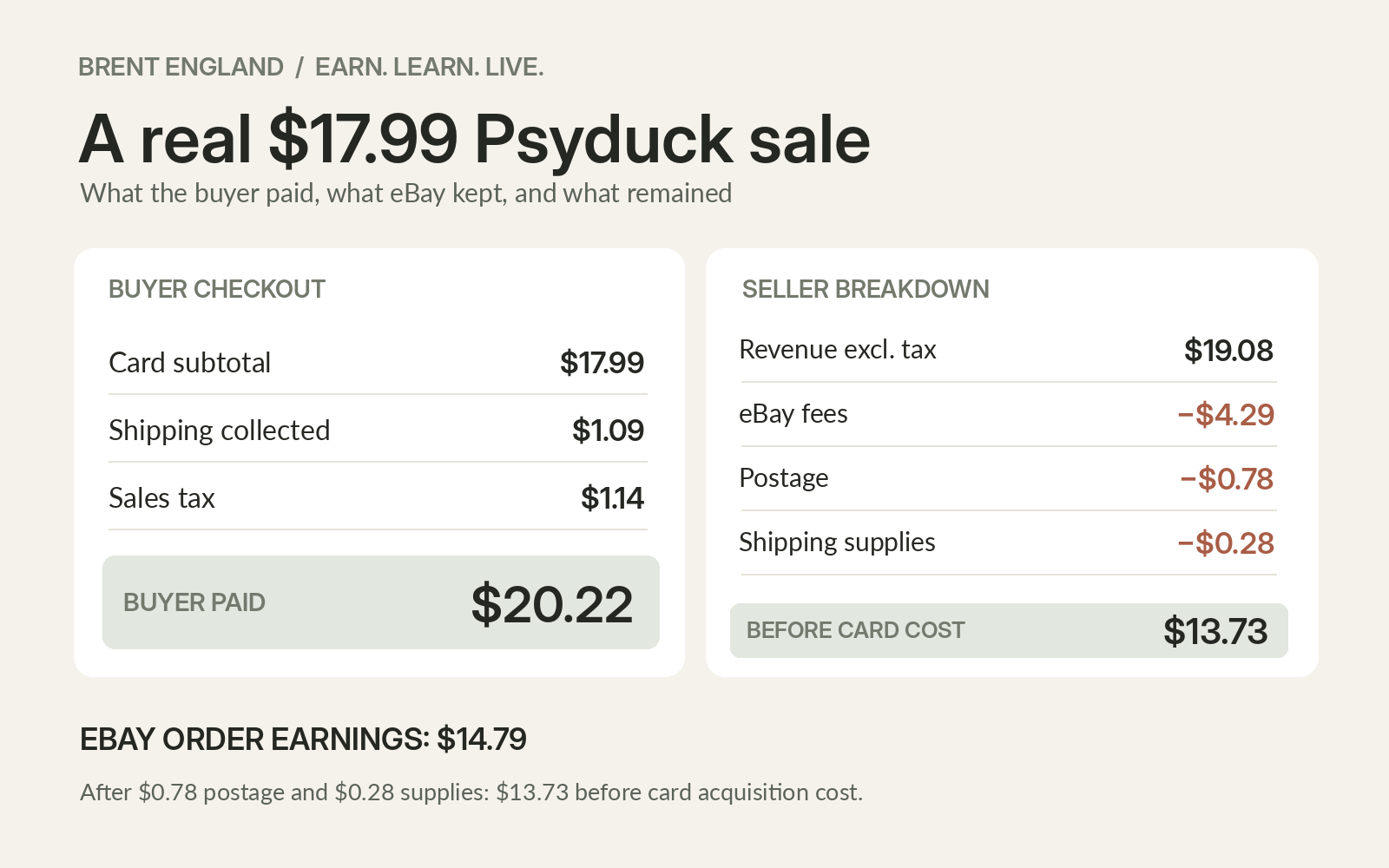
The important distinction is that $13.73 is what remained after eBay fees and fulfillment costs, not necessarily my overall tournament profit. There may have been a tournament entry fee and other costs associated with participating. I'm keeping those records separate so I don't pretend a prize card was completely cost-free or count the same expense twice.
That distinction is one reason I want to document real transactions rather than just announce what a card sold for. The selling price is exciting; the amount remaining after costs is what helps me make better decisions.
If you want the full transaction breakdown, I've written a separate article about how I calculate actual profit when selling Pokémon cards on eBay.
What I do with a prize after the tournament
My process is intentionally simple. I sort what I receive into cards I want to keep or use, items worth researching for resale, and bulk cards that may not justify selling individually.
For a potential resale, I compare recent sold listings, not just active asking prices. I pay attention to the exact card version, condition, expected fees, and how much postage and packaging will cost. A card that looks valuable on paper may not be a good flip after expenses—or it may take a long time to sell.
When the expected numbers make sense, I list it. If it sells, I record the actual transaction, then decide how much cash the business can safely put toward future inventory.
I'm not trying to open every pack in search of a big hit or turn every tournament into a business transaction. I still play because I enjoy the game. This is simply a way to become more intentional about the value that sometimes comes from participating.
Tracking tournament results is different from tracking resale profit
There are really two sets of numbers I need to understand.
The first is the tournament itself: entry fees, travel or other relevant costs, the packs or store credit received, and whether any cash prizes were awarded. A sealed pack or card can have an estimated market value without being cash in my pocket.
The second is what happens after the tournament: inventory I decide to sell, the money a buyer pays, the marketplace fees, packaging, postage, and the actual amount left from a completed sale.
Keeping these separate helps avoid a common mistake: counting a card's estimated prize value when I receive it and then counting the full sale proceeds again when I sell it.
The tool I use to follow a season
I created a Pokémon TCG Season Profit Tracker to help organize tournament costs, prizes, and related card sales. It's designed for players who want a clearer view of what competing costs and what they receive along the way.
Explore the Pokémon TCG Season Profit Tracker →
Turning individual sales into a repeatable business
The next challenge isn't just getting one card sold. It's understanding whether I can repeat the process consistently.
I want to know how much cash I have available, which cards are still listed, what I spent to acquire inventory, and how much I actually earned after fees. That includes sports cards I buy for resale as well as Pokémon cards I receive through tournaments.
I'm careful not to confuse inventory value, cash available, and realized profit. A card listed for $30 isn't the same as having $30 to reinvest. And cash from a sale can include money needed to replace the inventory I sold.
Keeping the reselling side organized
For that reason I also built a Card Reseller Inventory & Profit Tracker. It keeps inventory, completed sales, selling costs, and overall results in one workbook instead of scattered notes.
Explore the Card Reseller Inventory & Profit Tracker →
You don't need a paid spreadsheet to begin tracking sales; even a basic record is better than guessing. The point is to know your numbers before spending the next dollar.
Where I hope this eventually leads
Card reselling isn't the final destination for me. My larger goal is to improve my financial position: pay down consumer debt, build an emergency fund, and eventually put money into long-term investments, including the dividend-paying stocks I've been learning about.
My regular employment income is part of that plan too. I'd like this business to become an additional source of income that helps move those goals forward, rather than something I have to depend on for every bill.
For now, I'm keeping the goals close to the ground: understand the cost of competing, turn suitable prizes into real sales, research future inventory carefully, and record what happens—even when a flip doesn't go the way I expect.
I'll share those results here as I learn. No inflated success stories, no pretending every prize is profit. Just the process of trying to build something useful from interests I already have.
Earn. Learn. Live.
— Brent England
Note: The Psyduck transaction shown here is a real sale. Net sale proceeds are after the reported eBay transaction fee, actual postage, and shipping supplies, but before any tournament costs, other overhead, or applicable taxes. Individual event prizes and seller expenses vary.